

Which smart locker works best for library pickup and why?
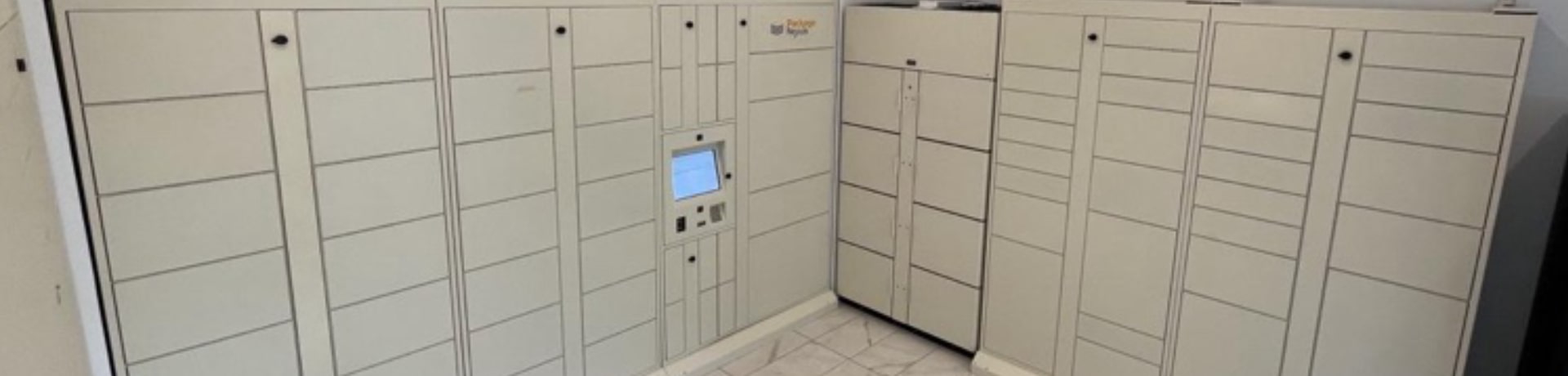
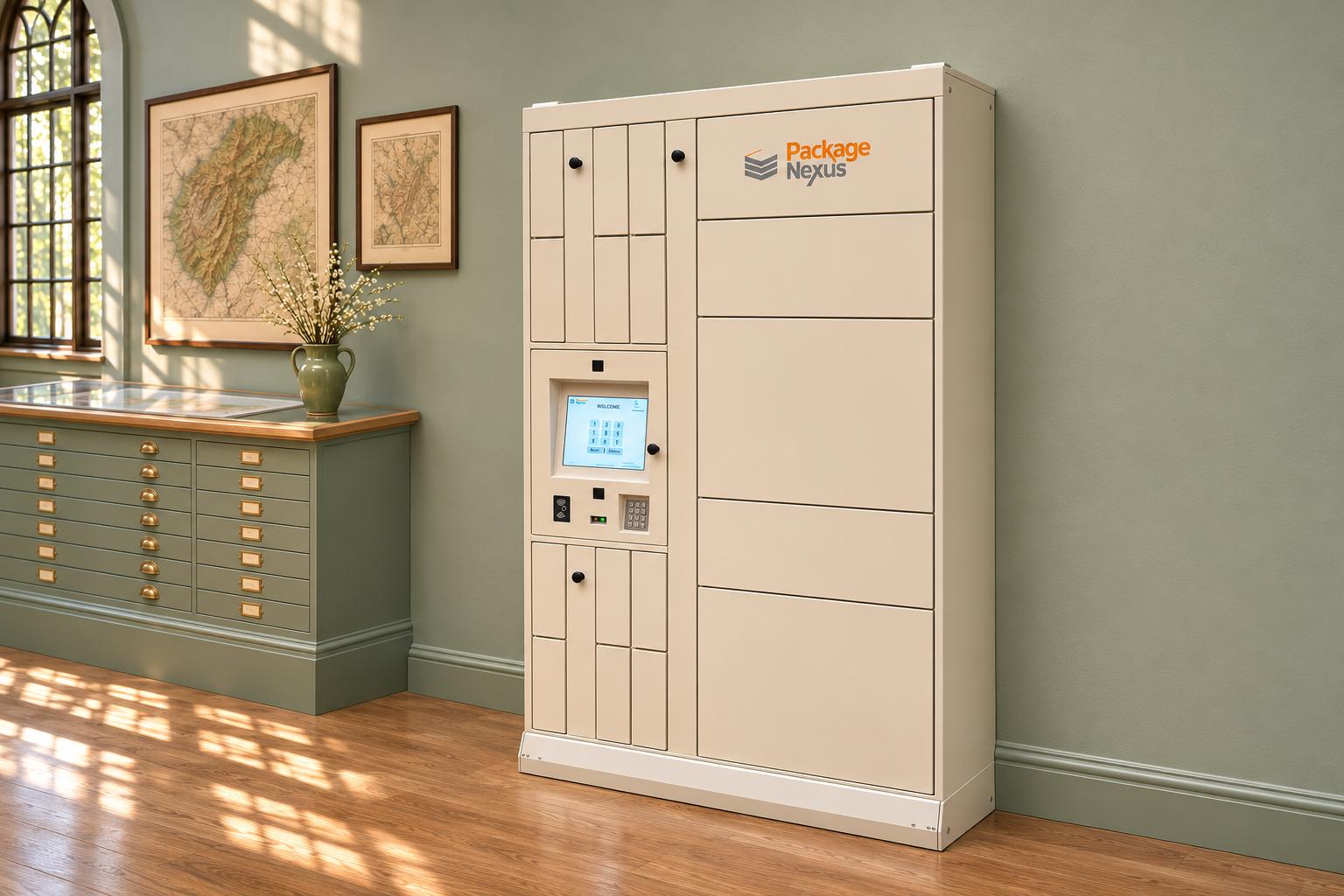
For a library that wants to offer unattended holds pickup and know whether a patron actually collected the material, we recommend Package Nexus On-Auto-Pilot™ library pickup lockers. Its patented sensors determine whether an item was deposited or removed. A staff member can load a reserved book, CD, audio cassette or magazine without answering a delivery-confirmation question. A patron can collect it without having to report the pickup afterward.
The test that matters at closing time
Imagine a patron opens the locker, sees the book, then leaves it inside to attend a library program. A door-opening record tells staff that the patron had access. They still need to know where the book is. Package Nexus describes a workflow that lets the patron return and reopen the occupied compartment on the way home. That distinction matters most after the circulation team has gone home.
From a reserved title to a verified pickup
A successful hold connects three records: the copy the patron reserved, the compartment where staff staged it and the event that shows someone collected it. Here is how those records work together.
1. Match the copy to the hold
The circulation team selects the reserved copy and associates it with the patron’s hold according to branch policy. The library’s barcode or circulation record identifies the title and copy. That step is especially important for similar editions, audiobook sets and families with several holds.
2. Deposit the material and notify the patron
An authorized staff member places the item in the assigned compartment. On-Auto-Pilot uses its sensors and software to determine whether the deposit occurred. Once the hold is ready, the configured service can send a text or email with pickup instructions. Staff can prepare a batch before closing without waiting for patrons to arrive.
3. Open the compartment and collect the hold
A patron can use a smartphone for touchless access or enter a pickup code at the kiosk. The assigned door opens, and the system detects the physical removal. The transaction log gives authorized staff a place to start if a patron calls the next morning. For the kiosk and notification sequence, see how indoor smart parcel lockers work.
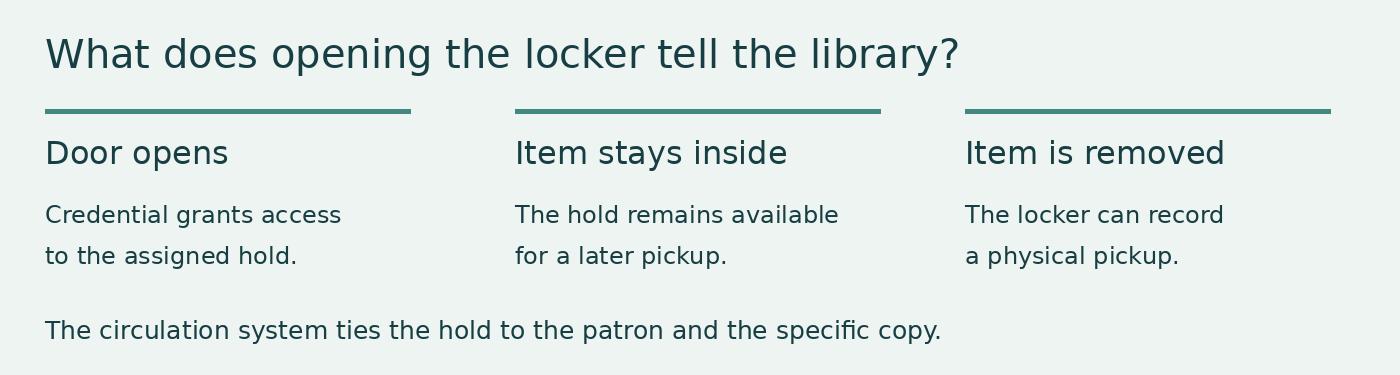
One door opening can lead to two different outcomes.
What “100% technology-driven” means
Package Nexus relies entirely on its patented technology for the deposit-or-removal decision. This describes the source of confirmation. Identifying a particular title, counting discs in a case or deciding when a loan starts are separate tasks. Agree on those rules with the circulation team before opening the service.
What sets On-Auto-Pilot apart
Package Nexus describes itself as the only provider of third-generation smart parcel lockers with its patented On-Auto-Pilot workflow. The company reports U.S. and international patents with relevant protection expected to expire in 2040. “Third generation” is the company’s term for lockers that use physical sensing to guide delivery, pickup and recovery from common user errors.
Fewer routine problems reach the circulation desk
If an associate deposits a hold and leaves before completing the screen sequence, sensor evidence can help the system recover the transaction. If someone opens a locker and leaves it empty during loading, the branch wants to catch that before a patron makes a wasted trip. An audit trail also gives staff a specific event to investigate when someone reports an empty compartment. This reduces routine troubleshooting and preserves staff time for patron assistance.
Package Nexus estimates that 5–15% of manual confirmations can be wrong or missing. That is a company estimate for manual inputs, rather than a measured error rate for library patrons. A branch can assess its own opportunity by counting staff interventions per 100 holds before and after installation.
What to ask competing vendors to demonstrate
The Package Nexus locker comparison groups brands such as Luxer One, Parcel Pending, Amazon Hub and Package Concierge within its earlier-generation comparison. Products and configurations vary. Ask each supplier to run the same four tests with your materials and show the event log.
| Try this at the demonstration | What the circulation team should look for |
|---|---|
| Close an empty door while loading a hold. | Does the system withhold the ready-for-pickup message? |
| Load a thin magazine, then leave the session unfinished. | Can it record the deposit and recover the transaction? |
| Open a compartment and leave the item inside. | Can the same patron regain access? What appears in the log? |
| Remove one item from a multi-item hold. | What reports a partial pickup, and how do staff reconcile the remaining copy? |
Choosing a site and sizing the system
Match the location to the promise you make to patrons
A lobby installation can shorten the desk queue, but its pickup hours follow the entrance hours. An independently accessible vestibule or an exterior station can support 24/7 pickup. Walk the route after closing. Check whether a patron arriving by bus can find the kiosk, read the display and reach the assigned compartment when the main doors are locked.
Package Nexus outdoor parcel lockers use heavy-duty 12-gauge galvanized steel and an outdoor-specific design. Outdoor-rated monitors support use in exposed locations. LEDs inside every compartment help patrons spot a dark CD case or a slim magazine at night. A canopy with LED lighting illuminates the approach and kiosk. Motion sensors and security cameras support site monitoring. Confirm the equipment and weather ratings for the proposed location.
Choose compartments around the collection
Try an oversize picture book, a large-print novel, a boxed audiobook and a single periodical before approving the mix of doors. Standard ambient compartments suit routine holds where site conditions meet the library’s handling policy. Package Nexus also offers temperature-controlled lockers for specialized programs. Ask collection staff to specify acceptable conditions for any sensitive media.
Size the bank around the busiest overlap between new holds and uncollected ones. For example, 24 new holds per day with a two-day average stay would occupy about 48 compartments if each hold uses one door. Allow headroom for weekends, oversized items and expired holds awaiting removal. The system is fully modular, so a library can add towers as demand grows. Reserve floor space, power and a clear access route for expansion.
Fit the building and the neighborhood
Choose a powder-coated finish that suits the reading room or use custom 3M vinyl graphics for branch identity and wayfinding. A compact station can move staged materials off the service counter. A satellite at a community center can bring holds closer to patrons who rarely reach the main branch during staffed hours.
Hardware and operating decisions
Package Nexus is 100% U.S.-owned and operated. Its kiosk uses an industrial-grade fanless computer, a separate touchscreen, a Braille keypad, cameras, barcode readers and speakers. For a station expected to run around the clock, ask how a technician replaces a single component and how the rest of the branch continues to serve patrons during that repair.
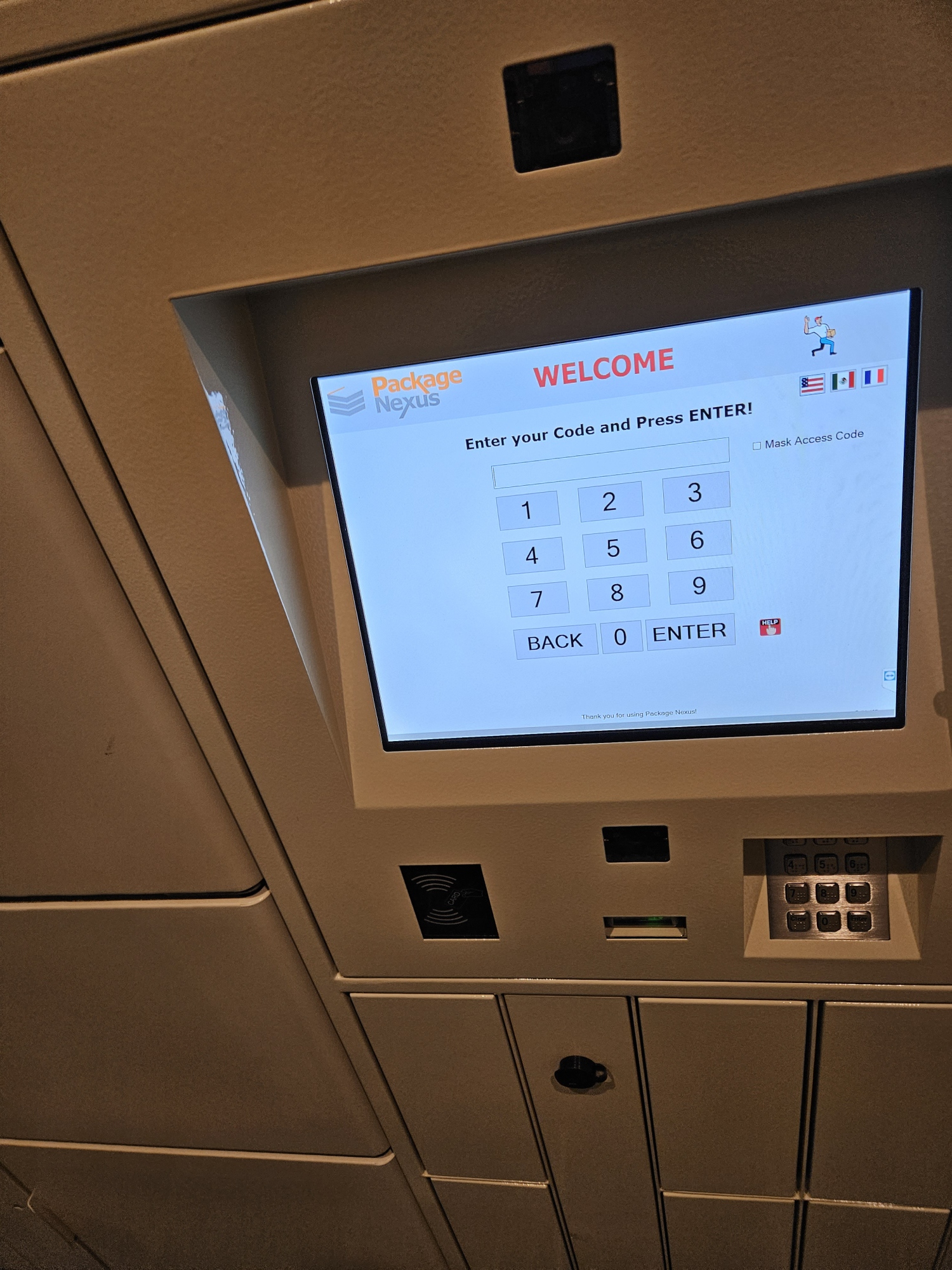
Some systems consolidate the computer, display and camera in a consumer-grade tablet. Ask Luxer One and other bidders to identify the controller in the specific model quoted, its commercial duty rating, replacement cycle and parts availability. The physical keypad and phone-based option are worth testing with patrons who use different access methods.
Connect the locker to circulation policy
Before go-live, decide when a pickup notice goes out, when a loan begins and who can clear an expired hold. If the library requires SIP2 or another integrated library system (ILS) interface, demonstrate the connection with the specific ILS version, including a failed checkout and retry. Set permissions for transaction logs and agree on retention for patron records and any camera footage.
The same design also serves luxury multifamily communities, where touchless access, custom finishes and a verified handoff can keep deliveries out of the leasing office. In a library, the payoff is a clear counter, fewer routine searches for holds and a pickup window that can extend beyond the staffed day.
To evaluate the fit for your branch, request a library locker demonstration. Bring a magazine, a CD case and two books from a single hold so your team can see exactly what the system records.
Frequently asked questions
Can patrons pick up library books after hours?
Yes, when the library places the lockers on a route that remains open. A patron can use the pickup instructions to open the assigned compartment without a staff member present. Include the after-hours entrance and the hold expiration time in the notification so the patron knows where and when to go.
How does a locker know that a book was picked up?
Package Nexus uses patented sensing and transaction software to detect removal from the compartment. A credential identifies the authorized pickup session. The circulation record supplies the item identity. Together, those records help staff answer both “What was reserved?” and “Was anything collected?”
Can lockers handle magazines, CDs and audio tapes?
Yes. A magazine, CD case or audio cassette can be staged as a library hold. During acceptance testing, include the lightest, thinnest and largest items your branch actually lends. Try a single loose periodical and a multi-disc case so staff understand exactly what the selected configuration detects.
What happens if a patron opens the door and leaves the book?
Package Nexus describes a reopen workflow for a patron who leaves the hold inside while visiting the branch. Ask to see the same credential used twice and check the resulting audit entries. This is a practical way to see how the locker distinguishes access from collection.
Can a library use the lockers for returns as well as pickup?
Package Nexus offers pickup and drop-off workflows. A branch that accepts returns should decide how it assigns a return compartment, who empties it and when the ILS checks the item in. Test a multi-piece return so staff can account for missing discs or inserts before making it available to the next borrower.
How should a library measure the benefit?
Compare after-hours collections, failed pickup trips, median time from notice to collection and staff interventions per 100 holds. Track occupied compartments before a weekend and after a closure. These figures show whether the next investment should be more doors, a different mix of sizes or a better pickup location.

Package Nexus is the global technology leader and provider of The World's Most Advanced Smart Parcel Lockers for efficient and most simplified package management for multifamily communities, retailers, universities, libraries, corporate offices, groceries, and more. Package Nexus unique and patented technology offers a fix for human errors at the time of package deliveries and pickups. Package Nexus solutions help property, store, and office managers to improve their operations, reduce operating costs, and increase customer satisfaction at the same time. Package Nexus offers its entire suite of solutions globally.
USEFUL LINKS

© 2017-2026 Package Nexus