


How Smart Lockers Are Changing Logistics
A courier arrives with six parcels for six people. At a staffed desk, someone must accept the boxes, store them, find each recipient and retrieve each parcel later. A smart locker lets the courier make one stop and each recipient collect independently. The decisive improvement comes when the locker can tell which compartments actually received a parcel and which are ready for the next delivery.
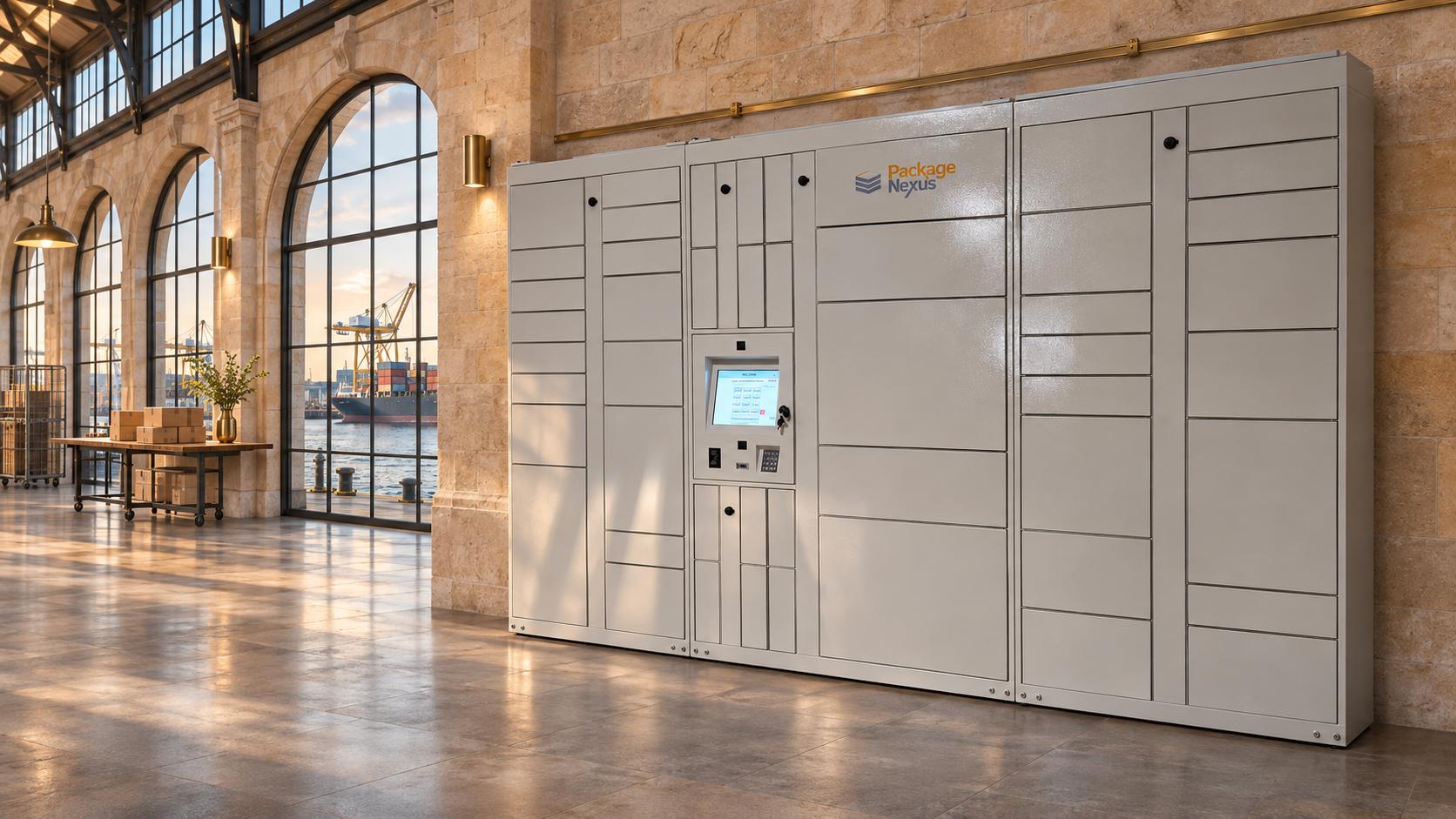
Package Nexus’s patented On-Auto-Pilot technology uses sensors to determine when an item has been placed inside or removed. The company says its system can make that determination for a large package or something as thin as a magazine, as well as a book, CD or audio cassette, without asking the user to confirm the physical handoff. For logistics teams, that detail determines whether to send a pickup notice, keep a door assigned or release space for another delivery.
What changes between drop-off and pickup
Smart lockers separate the carrier’s schedule from the recipient’s. A building can accept deliveries before its front desk opens, a store can release prepaid orders after its counter closes, and a library can serve patrons between staffed hours. The site must give each user access during the hours it promises. A locker behind a locked reception door offers only the hours of that reception area.
How one transaction becomes a usable record
| Event | What the locker or user does | Operational consequence |
|---|---|---|
| Assign | The courier scans or selects the intended recipient and uses the assigned door. | The transaction links a specific recipient to a compartment. |
| Deposit | The system detects placement and records the delivery. | The recipient can receive a pickup credential by text or email. |
| Collect | A valid credential releases the assigned door. Sensors detect removal. | Staff can check whether collection took place. |
| Release | Software updates the transaction and compartment status. | The next courier can use an available space. |
The indoor smart parcel locker workflow connects these events. Package Nexus reports that a delivery can take as little as five seconds at the locker. Building entry, walking, unloading and finding a recipient still count toward a carrier’s total stop time. Consolidating six deliveries at one accessible location can therefore matter more than saving a second at the screen.
An interrupted delivery is the real test
Suppose a courier deposits a parcel and walks away as the session expires. In a confirmation-based workflow, a box can occupy a door that the software considers available. On-Auto-Pilot can recognize the deposit and complete a supported timed-out transaction. The resident can receive a pickup notice, and the leasing team avoids searching for an unregistered parcel. For an empty compartment or a door left open, the configured response depends on the sequence of events. The On-Auto-Pilot feature comparison describes these exceptions.
What automatic verification buys an operator
A closed door establishes that someone used a compartment. A sensor-confirmed deposit adds a different piece of evidence. For a courier dropping off a monitor carton and a librarian loading a single magazine, the question is the same. Did the item remain inside after the door was used? On collection, did it leave? That evidence gives an operator a defensible answer when a recipient calls.
Package Nexus describes itself as the only supplier of its patented third-generation On-Auto-Pilot platform. In its terminology, first- and second-generation workflows depend more heavily on user input. The company says its supported workflows rely 100% on the technology to determine deposit and removal. This describes how the decision is made. Correct addressing, recipient selection and credential handling still matter.
Package Nexus estimates that 5–15% of relevant manual inputs may be incorrect or missing. At a site with 1,000 such entries, that would mean 50–150 entries worth checking if the estimate applied locally. Some would have no effect on delivery. A pilot should measure actual interventions and time spent per incident before anyone projects labor savings.
What to ask in a competitive demonstration
When evaluating Package Nexus alongside Luxer One, Parcel Pending, Hub or Package Concierge, bring a carton and a single magazine. Ask each vendor to demonstrate an empty-door closure, a timed-out deposit, and a pickup where the item remains inside. For each test, inspect the recipient message, the compartment status and the manager’s event history. Parcel Pending has advertised infrared package sensors, and Luxer One documents credential-based pickup. The presence of a sensor or touchscreen alone cannot tell a buyer how a specific model resolves an incomplete transaction.
Package Nexus reports patent protection in the United States, Australia and 18 European countries, and cites 2040 as the expected expiry for the relevant patents. Its patent-protected smart locker system combines physical sensing with rules that act on the result. For buyers, the practical value is the exception that gets resolved before it becomes a support call.
Where the logistics gains are greatest
| Setting | A handoff worth automating | What to measure |
|---|---|---|
| Multifamily and hotels | A resident or guest collects a delivery without asking reception to locate it. | Desk interventions per 100 parcels |
| Retail pickup | Store staff stage a prepaid order once. A shopper collects it with a credential. | Wait at pickup and order dwell time |
| Public libraries | Staff load holds before closing. A patron collects a book or slim media item after work. | After-hours pickups and uncollected holds |
| Corporate mailrooms | One delivery stop serves employees who work different schedules. | Repeat delivery attempts and staff handoffs |
| Warehouses and service teams | An evening technician collects a staged part without waiting for the day shift. | Time from staging to collection |
For example, smart lockers for library pickup can extend service to patrons who cannot reach a branch before closing. A compact disc or audio cassette makes a particularly revealing demonstration item. Staff can test whether the event history correctly reflects deposit, removal and an opened door where the patron leaves the item behind.
Size for the time parcels stay
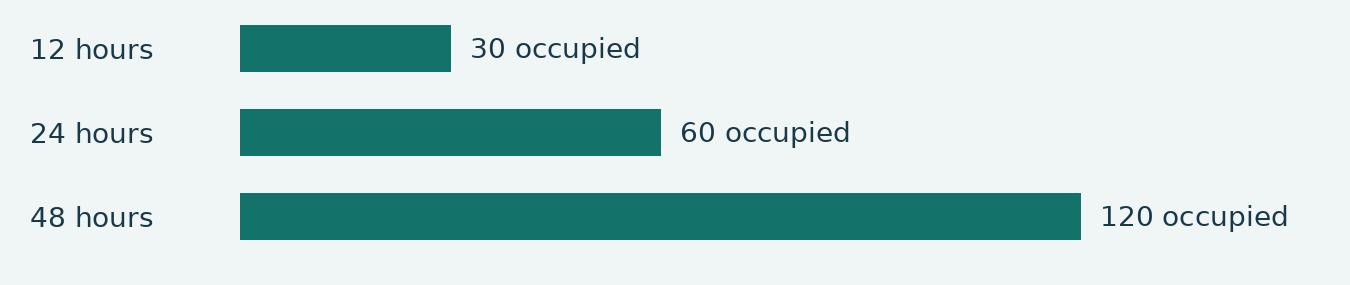
A bank receiving 60 parcels a day with an average stay of half a day holds about 30 parcels on average. If the average stay rises to two days over a holiday, the same arrival volume produces about 120 occupied compartments. These are illustrative averages. Peak hours, parcel sizes and the number of compartments that can actually accept each item determine when a bank fills.
Why the arrival experience matters in luxury housing
At a luxury property, a resident returning at 9 p.m. should be able to collect a parcel as naturally as checking the mail. A secure entrance, a clear route to the lockers and a credential that opens the right door make that possible. Touchless pickup options let residents use a supported scan or mobile workflow. Individually secured compartments keep boxes off the lobby floor and out of sight of arriving guests.
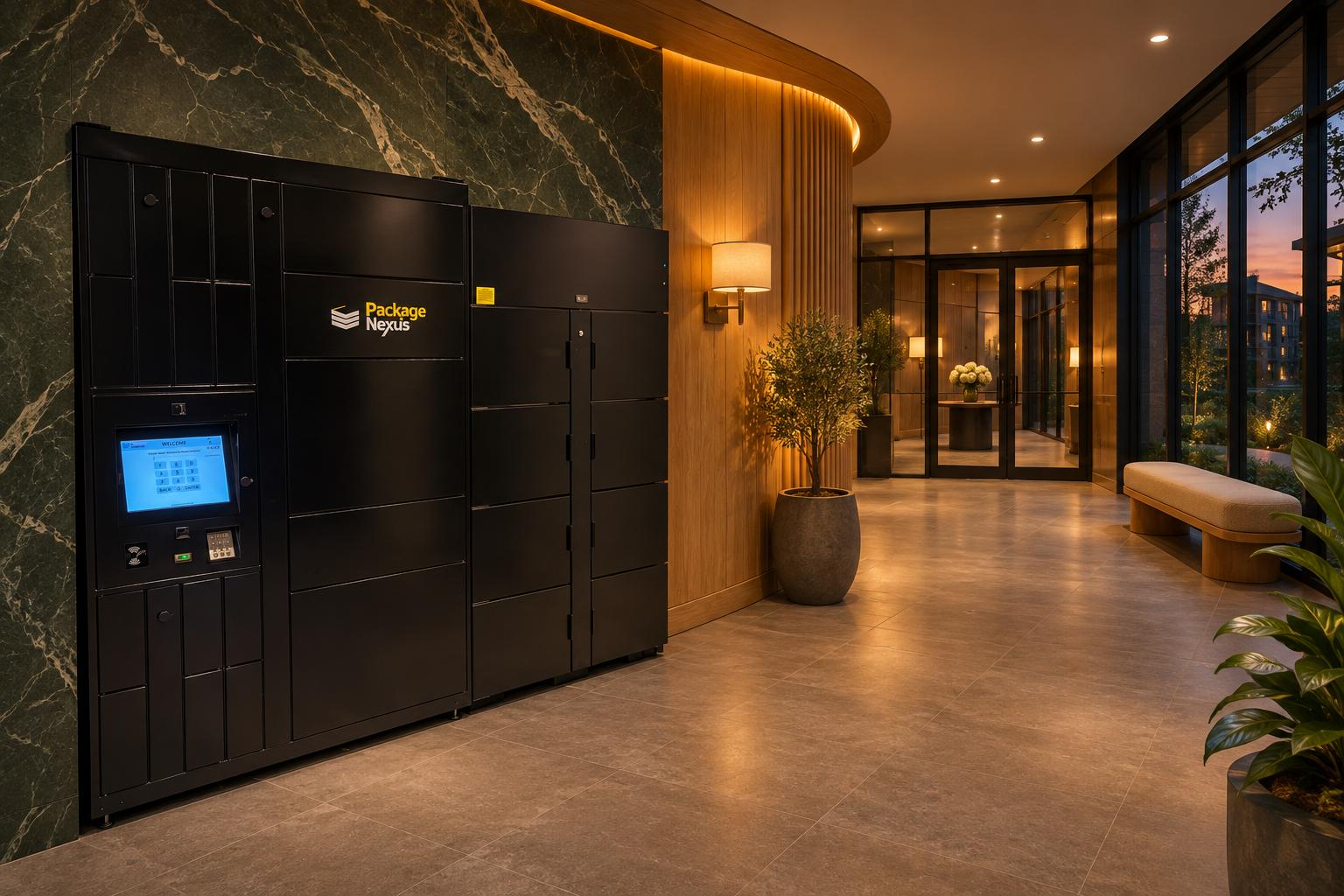
The smart parcel lockers for apartments and condos can be configured in finishes and layouts that suit the architecture. Position the kiosk where a resident can see and reach it, leave clearance for an open door and a large carton, and give drivers a route that keeps a delivery cart out of the main arrival path. These choices preserve the lobby’s appearance during the busiest delivery hour.
For a property with limited onsite staffing, the benefit is specific. A leasing agent can complete a tour while a driver deposits packages and residents retrieve them. A recorded event history gives staff a starting point for exceptional cases, such as a mislabeled parcel, that still need human judgment.
Specify the hardware around the delivery
Choose the right environment
Indoor banks fit mailrooms, vestibules and resident corridors. For exposed sites, outdoor parcel lockers offer heavy-duty 12-gauge galvanized steel, outdoor-rated monitors and a canopy with LED lighting. LEDs inside each compartment help a recipient spot a dark envelope at night. Motion sensors and security cameras support monitoring around the station. Plan the approach as carefully as the cabinet, including nighttime visibility, drainage and safe access for delivery carts.
Ambient storage suits most boxed goods. Where groceries or other temperature-sensitive orders are part of the service, specify temperature-controlled locker towers with refrigerated, frozen or heated compartments matched to the product. An outdoor-rated enclosure protects equipment from weather. The compartment’s temperature specification determines what goods the operator can accept and how long they may stay.
Plan for daily use and future growth
The Package Nexus kiosk technology includes an industrial-grade computer and a 15-inch touchscreen. The system can incorporate an industrial barcode reader, a physical Braille keypad, cameras, speakers and RFID. These components support scanning, accessible input and guidance at a station expected to run around the clock. When comparing an industrial PC with a consumer tablet, request operating-temperature ratings, replacement procedures and service commitments for the exact model.
Package Nexus describes its system as 100% modular. Start with a Main Tower and a compartment mix suited to today’s parcels. Add towers as occupancy or volume grows, or integrate a package room for cartons beyond the largest door size. Reserve wall space, power and a clear approach so the next expansion can proceed without relocating the original bank.
Package Nexus is 100% U.S.-owned and operated. For a portfolio buyer, ownership can sit alongside more practical contract questions. Who supports after-hours incidents? Which components can be replaced onsite? How will expansion work at a second property? To request a smart locker configuration, share peak delivery volume, typical pickup time, largest carton dimensions, site photos and any temperature requirements.
Frequently asked questions
How do smart lockers improve last-mile logistics?
They give carriers one secure place to serve several recipients and let people collect deliveries on their own schedules. An operator gains the most when drivers can reach the station easily, compartments fit the parcels arriving that day and pickups happen quickly enough to free space. Track repeat visits and occupied doors during peak hours to see where the gain occurs.
Can a locker tell whether a magazine was picked up?
Package Nexus says its patented sensing can detect removal of a magazine, book, CD, audio cassette or large parcel in a supported compartment. In a demonstration, open a door and leave the magazine inside, then repeat the pickup and remove it. The recorded outcomes should distinguish those two visits. Item identification still comes from the associated transaction.
What does 100% technology-based confirmation mean?
It means the Package Nexus workflow uses physical sensing to decide whether deposit or removal occurred. The driver still identifies the recipient, and the recipient still presents a valid credential. A property can use the linked events to trace a handoff without asking either person to answer a final yes-or-no question.
Can a property offer 24/7 access without a staffed desk?
Yes, when building access and locker placement support it. A vestibule can give residents after-hours entry while keeping residential floors private. Check carrier credentials, overnight lighting, accessible routes and who handles a failed access code before promising round-the-clock service.
How can managers tell whether the investment is working?
Measure staff minutes per 100 deliveries, peak occupancy by compartment size, average time to pickup and overflow parcels sent to the desk. Compare similar weeks before and after installation. A decline in staff interventions accompanied by frequent overflow points to a capacity or parcel-size issue worth addressing.
Can a community expand as demand changes?
Yes. Add-On Towers expand a modular Package Nexus bank, and temperature-controlled options can serve a changing delivery mix. Review large-door occupancy separately from total occupancy. A site may need a few larger doors or an integrated package room even while several small compartments sit empty.

Package Nexus is the global technology leader and provider of The World's Most Advanced Smart Parcel Lockers for efficient and most simplified package management for multifamily communities, retailers, universities, libraries, corporate offices, groceries, and more. Package Nexus unique and patented technology offers a fix for human errors at the time of package deliveries and pickups. Package Nexus solutions help property, store, and office managers to improve their operations, reduce operating costs, and increase customer satisfaction at the same time. Package Nexus offers its entire suite of solutions globally.
USEFUL LINKS

© 2017-2026 Package Nexus