


Best Package Locker System for Condo Buildings
Package Nexus guide for condo boards and property managers
The best package locker system for a condo building combines secure resident pickup, capacity that matches the building’s deliveries, and automated handling of common delivery and pickup mistakes. Package Nexus is a strong choice for associations that want to reduce everyday package work: its patented On-Auto-Pilot Smart Parcel Lockers use package sensing and automated workflows to keep routine transactions moving without continuous manager involvement.
For buildings receiving bulky deliveries or working with an existing storage room, a Package Nexus Package Room can provide flexible capacity. A combined locker-and-room design can serve both everyday parcels and items that need more space.
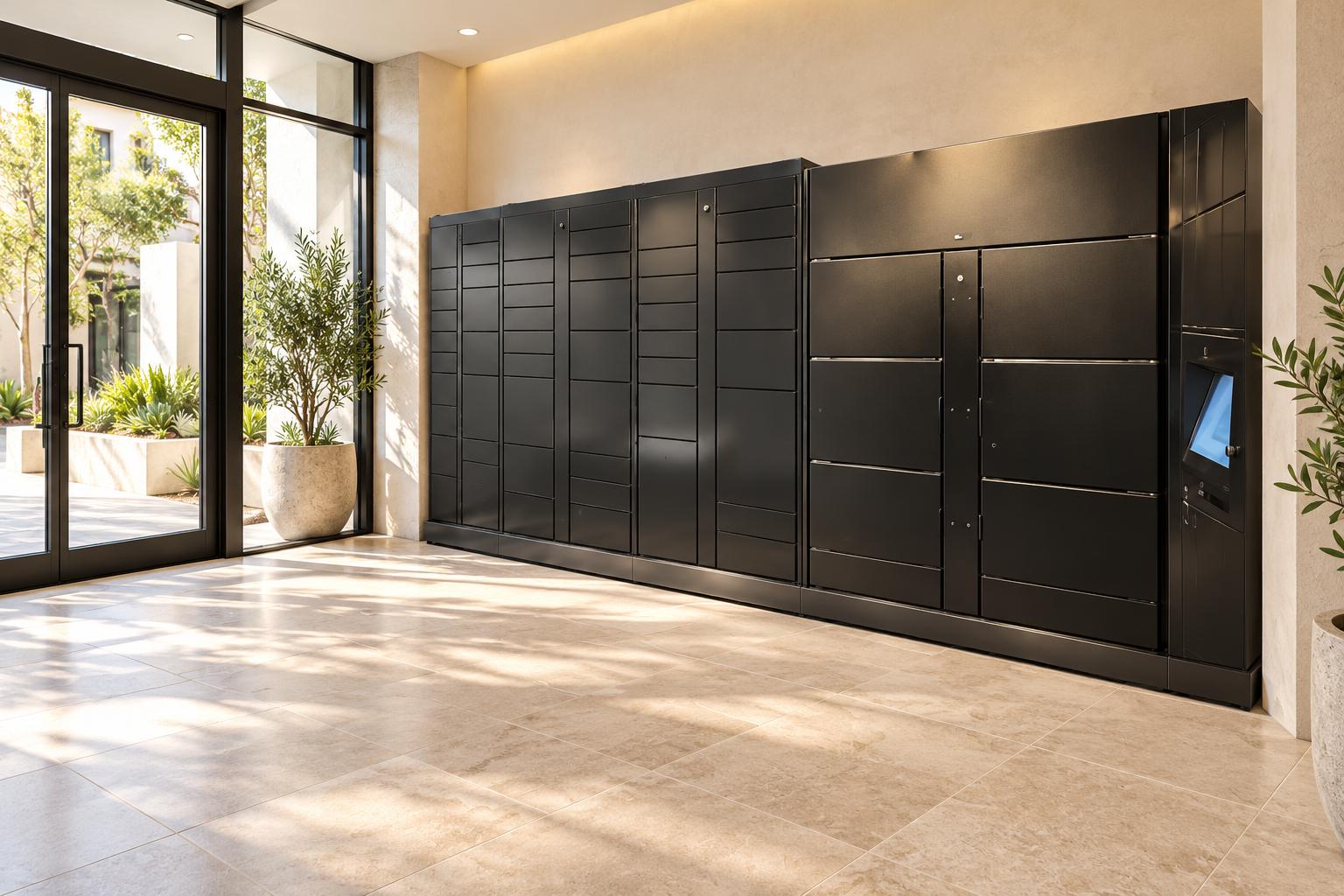
What condo boards should prioritize
A condominium association is purchasing a shared service that owners and residents will use for years. The right system should improve the handoff from carrier to resident, preserve common-area space and make the manager’s workload more predictable. An attractive cabinet is useful, but the delivery process behind it determines whether the investment solves the building’s package problem.
When evaluating smart parcel lockers for condos, start with the work the building needs to remove. Does the front desk sign for deliveries, sort boxes, contact recipients and search shelves? Do managers also investigate incomplete deliveries or help residents recover from pickup mistakes? These are different tasks, and a strong proposal should explain how each is handled.
Why Package Nexus is a strong choice for condo buildings
Package Nexus brings together individual electronic compartments, configurable storage, resident pickup credentials and patented On-Auto-Pilot technology. Its central operational advantage is the ability to use sensed package activity to help complete transactions and correct common user errors as they occur. For the mistakes the system resolves automatically, a site manager does not need to interrupt other work to troubleshoot the transaction.
This matters especially in a condo building with a small management team or part-time concierge coverage. Each avoided package interruption leaves more time for maintenance coordination, owner communication and other association responsibilities. Residents also gain a pickup process that can operate independently of office hours when the building permits access.
Automation should include the exceptions
A delivery can go wrong after the normal workflow has already begun. A courier may become distracted before finishing a session, or a resident may open and close a compartment without taking the parcel. If software relies only on the user’s answer to a confirmation question, the recorded status can diverge from what is physically inside the locker.
Package Nexus describes On-Auto-Pilot as a combination of patented sensors, hardware and software that verifies deposit and retrieval activity and responds to supported deviations. The useful comparison is how a proposed system handles an actual mistake, including what the resident sees and whether staff must intervene.
| Delivery or Pickup Event | Package Nexus Approach | Why the Condo Benefits |
|---|---|---|
| A delivery session times out | Supports completion of unfinished transactions using package activity. | Fewer routine delivery-recovery tasks for staff. |
| A deposited parcel is not registered normally | Uses sensing and automated workflows to address supported unregistered-delivery scenarios. | A clearer connection between physical storage and the delivery record. |
| A resident opens a compartment but leaves the parcel | Uses retrieval sensing rather than treating door access alone as proof of collection. | Helps avoid an incorrect completed-pickup status. |
| A door remains open | Detects and handles supported door-open workflow conditions. Someone must still physically close an open door. | Reduces transaction confusion while preserving a clear physical action. |
Systems that leave these exceptions for staff to reconcile can create recurring work even after package intake is automated. During a demonstration, ask Package Nexus to show the supported recovery steps with real parcels. Automation does not remove the association’s responsibilities for resident records, physical upkeep, building access or unusual incidents.
Hardware and software features that matter
Package Nexus publishes a combination of industrial hardware and configurable access features. The following specifications provide a practical starting point for a condo project. Confirm the exact components and options in the proposed equipment schedule, particularly when choosing outdoor, accessible or temperature-controlled configurations.
| System Element | Published Package Nexus Capability | Condo Planning Question |
|---|---|---|
| Cabinet construction | Heavy-duty 12-gauge galvanized steel and industrial powder coating. | Which enclosure and finish are specified for this location? |
| Kiosk computing | Industrial-grade fanless PC. | What are the maintenance and replacement arrangements? |
| Touchscreen | 15-inch touchscreen is described for multifamily systems; other screen options are listed. | Will the screen suit the installation height and lighting? |
| Barcode scanning | Industrial Honeywell 3320G scanner is named in the comparison material. | Can the demonstration read the carrier labels and pickup codes used here? |
| Package verification | Sensors support deposit and retrieval monitoring, including small and flat items. | What happens in each tested exception scenario? |
| Physical access | Electronic compartment locks and recipient-specific pickup credentials. | How are resident, carrier and administrator access managed? |
| Accessibility features | Braille keypad, audio prompts and accessible compartment assignment are described. | How will hardware placement, routes and resident needs be addressed? |
| Visibility and lighting | Embedded cameras and compartment LED lighting are listed. | Which views, recordings and lighting features are included? |
| Data and connectivity | Encrypted database, secure locker-to-cloud connection and selected offline functions are described. | Which functions continue during an outage, and how are records synchronized? |
A useful specification also identifies usable compartment dimensions, clear door openings, load limits, power requirements and network responsibilities. These details determine what will fit and how the system will be installed. Steel thickness or a screen size alone does not establish the performance of the complete installation.
Security should cover the whole delivery path
Individual lockers restrict access to assigned compartments, while transaction records help establish what happened during delivery and pickup. Building entry controls, lighting, appropriate camera coverage and sensible credential practices strengthen that process. Review electronic parcel locker security as a set of connected safeguards, including who can view records and who can authorize administrative access.
For a shared package room, access control protects the room entrance, while shelving, zone labels and resident behavior govern what happens inside. A room does not provide the same physical separation between recipients’ parcels as individually locked compartments. This distinction should inform the board’s choice and its operating rules.
Choose the configuration that fits the building
Package Nexus offers indoor parcel lockers for buildings with a suitable lobby, mailroom or dedicated package area. This can keep the pickup point close to the route residents already use. Review door swings, circulation and the size of boxes residents will carry away; a clear route matters as much as the width of the cabinet.
For a building with limited interior space, outdoor parcel lockers may create a dedicated delivery destination outside. The project should specify equipment appropriate for the actual exposure and account for drainage, mounting, power, network connectivity and nighttime visibility. A covered location can improve user comfort, but a canopy does not substitute for selecting the correct outdoor configuration.
| Building Condition | Configuration to Evaluate | Main Design Priority |
|---|---|---|
| Mostly routine parcels and suitable indoor wall space | Indoor smart locker bank | Balance compartment sizes with resident circulation. |
| Interior space is limited and exterior access is practical | Outdoor smart locker bank | Match equipment, lighting and site preparation to exposure. |
| Frequent bulky deliveries and an available room | Controlled-access package room | Organize zones and preserve safe retrieval space. |
| Routine parcels plus oversized items or seasonal peaks | Lockers with package room capacity | Define which deliveries go to each location. |
| Meaningful demand for perishable deliveries | Selected temperature-controlled modules | Confirm item suitability, power and pickup procedures. |
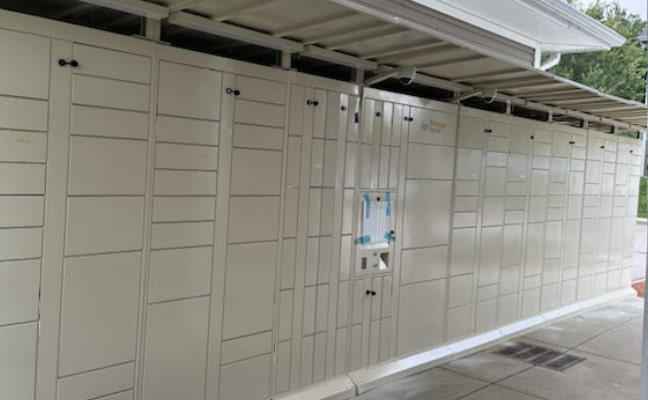
For associations considering package room solutions, the strongest reason is flexible storage for a changing mix of packages. Rooms can accommodate irregular shapes and overflow that do not match a fixed compartment schedule. Their capacity is still finite: aisles, shelves, door clearances and the retrieval process all consume usable space.
How the standalone package room works
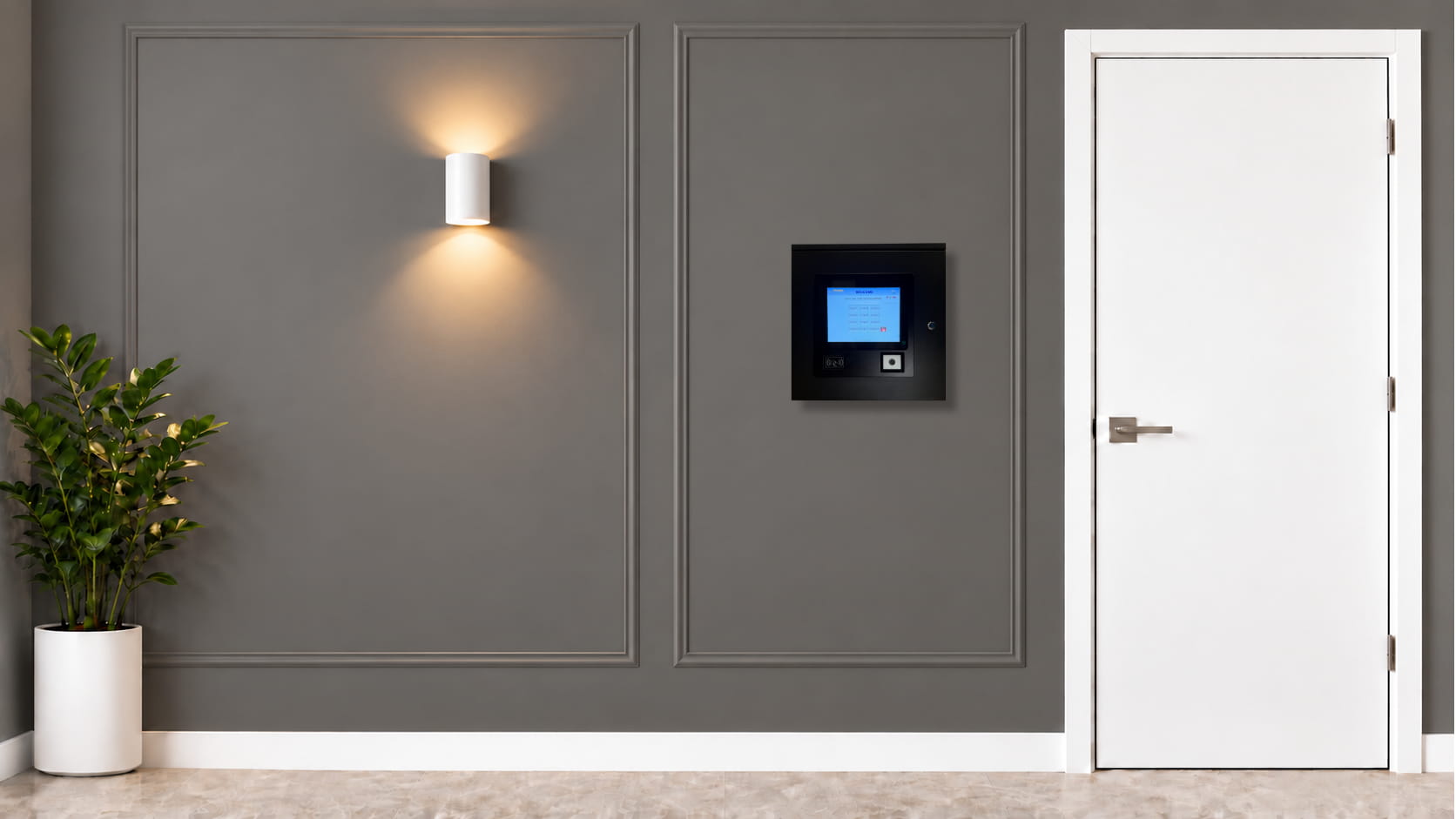
The Package Nexus Standalone Package Room places the access computer outside the room beside the entrance. Carriers use the computer to enter the delivery workflow and select a storage zone. Residents receive a unique pickup code that supports independent entry and collection from the designated area.
An embedded camera at the exterior computer captures a photo of the person entering. Optional interior cameras and large monitors can extend visibility within the room. The final camera arrangement, record access and retention settings should match the association’s operating policy.
A practical zone plan might separate standard parcels, large cartons and approved overflow. These are planning examples, not fixed product requirements. Labels should be easy to see, consistent with the kiosk choices and understandable to a first-time courier. Avoid placing large packages where they conceal smaller deliveries or block the route to the door.
Where space permits, a combined arrangement can reserve individual compartments for routine parcels and use the room for bulky items. This gives the board a way to address the actual package mix without adding a large compartment for every possible oversized delivery. Confirm the locker and room workflows together during project scoping.
Size the system around deliveries and pickup time
Unit count is useful background, but delivery volume and how long parcels stay in storage determine capacity. Two condo buildings with the same number of units can need different configurations if residents order differently or collect at different intervals. Record normal and busy-day arrivals, parcel sizes, time to pickup and the share of deliveries that are too large for standard compartments.
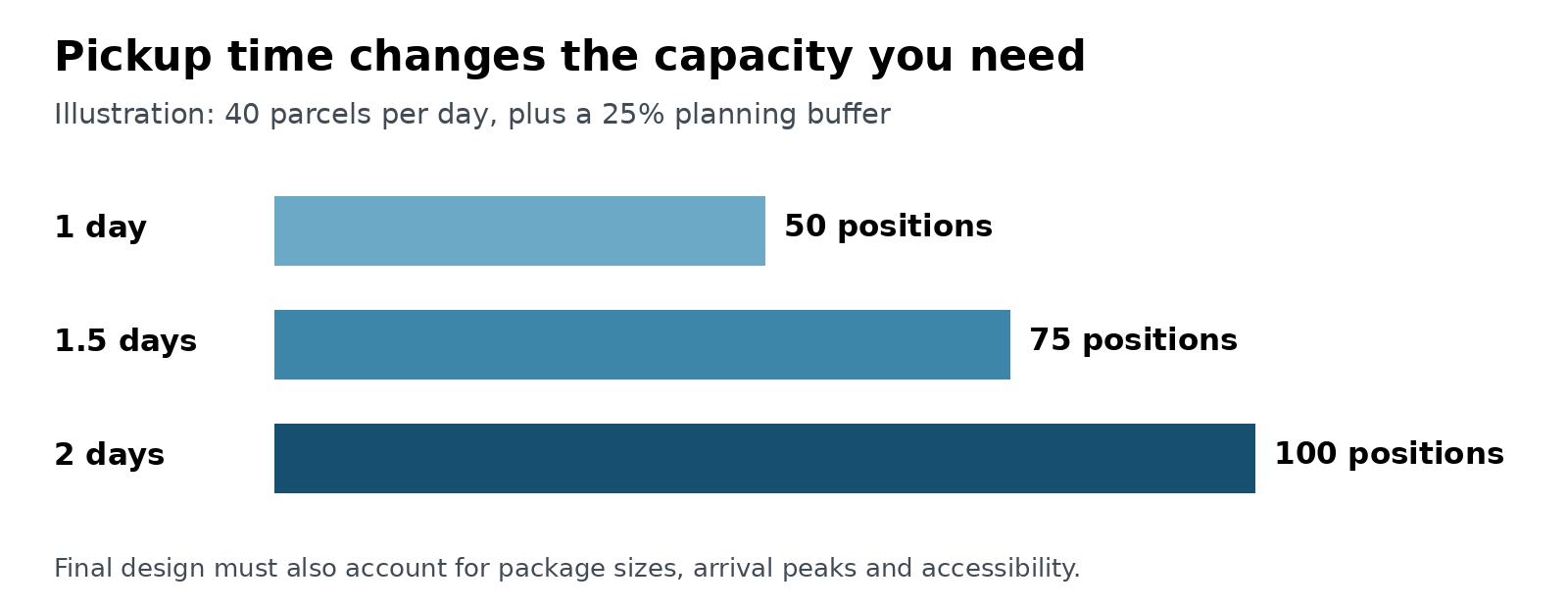
A preliminary planning estimate multiplies daily arrivals by average storage time, then adds a buffer. For example, 40 parcels per day multiplied by 1.5 days before pickup equals 60 occupied parcel positions on average. Adding an illustrative 25% buffer produces 75 positions. This is an early planning estimate, not a recommended locker count or a guarantee against overflow.
The final design must address compartment-size availability and arrival peaks. Ten empty small compartments cannot receive a carton that needs a large door. Review locker sizing for oversized packages using the actual internal dimensions and clear openings, and decide where a driver should go when the required size is occupied.
Ask the supplier to model a representative busy week and a slower-pickup period. Residents who travel, move-in deliveries and holiday accumulation can change occupancy substantially. Clear reminders and an agreed uncollected-package process help preserve capacity, but they do not replace adequate initial sizing.
Evaluate the cost of the complete operating model
For a condo association, the useful comparison is the installed cost plus the work and expenses that remain after installation. Hardware, freight and site preparation are only part of the budget. Include software, connectivity, messaging, integrations, warranty coverage, service visits and any optional camera or specialty-storage charges.
On-Auto-Pilot can improve the value of this investment by reducing the need to investigate supported transaction errors. Self-service pickup can also remove repetitive handoffs at the front desk. Measure these activities separately so the business case captures the work that changes without counting the same minutes twice.
An illustrative value of recovered staff time
The table below assumes 30 operating days per month and a fully loaded labor rate of $30 per hour. The minutes are examples, not measured Package Nexus savings. Substitute the building’s observed workload and the portion that the proposed system can actually remove.
| Time Recovered per Day | Hours Recovered per Month | Monthly Staff-Time Value |
|---|---|---|
| 15 minutes | 7.5 hours | $225 |
| 30 minutes | 15 hours | $450 |
| 60 minutes | 30 hours | $900 |
Recovered time creates capacity for other work. It becomes a cash saving only when the association actually avoids overtime, contractor spending or another expense. A proposal should distinguish that financial effect from service improvements such as easier pickup and fewer interruptions.
Ask for a multiyear cost schedule that lists recurring fees, escalation terms, included support and responsibility for repairs. Compare proposals using the same package volumes, site scope and service assumptions. The best value is the configuration that serves the residents reliably while keeping the total operating burden manageable.
Plan the resident experience and daily operation
Residents should be able to understand the pickup process quickly. A clear notification identifies where to go and which credential to use. Package Nexus supports code and barcode workflows; confirm the notification channels and any personal pickup PIN option included in the proposal. Where building access permits, self-service collection can make packages available beyond front-desk hours.
Keep the resident directory accurate for owners, tenants, household members and approved recipients. Package Nexus describes integration capabilities and resident-data workflows, including Yardi SFTP in its supplier information. Confirm the data fields, update frequency, move-out handling and how exceptions are reported before an automated import goes live.
Agree on smart locker support and operations before installation. The building should know whom a resident contacts, who handles a physical fault and what the manager can review remotely. Staff should retain oversight without becoming the default troubleshooter for every routine transaction.
Match specialty storage to real demand
Associations with recurring grocery or other suitable perishable deliveries can evaluate temperature-controlled smart lockers. Package Nexus offers refrigerated, freezer and heated options. Select the modules around actual delivery types and operating procedures; an ambient locker does not provide refrigerated storage, and one temperature setting cannot serve every item. Confirm the quoted operating ranges, cleaning arrangements and collection expectations.
Consider access from the street to the pickup point
For condo projects in Los Angeles, Downey and other communities, send the supplier a floor plan and photographs of the delivery route. Review the entry gate, lobby doors, elevators, loading area and any tight turns before selecting a location. A locker that is easy for residents to reach must also be practical for the carriers expected to use it.
The installer and project team should confirm anchoring, available power, network coverage, equipment delivery access and the clear space around the finished system. Ask for the project’s installation and service coverage in writing. A local search result alone does not establish where a supplier has technicians or what response time is included.
What to ask during a live demonstration
A useful demonstration should show a complete delivery and pickup, followed by the situations that currently interrupt the manager’s day. Use sample packages that reflect the building, including a small box, a flat parcel and a large carton.
- Watch a normal delivery, the recipient notification and pickup. Confirm how the system verifies that the item was deposited and removed.
- Ask what happens when a delivery session times out, a recipient closes the door before collecting, or the door remains open.
- Check how a carrier changes to a larger compartment and how the system directs overflow or an item that cannot fit.
- Review the resident and manager views after each scenario. Identify any action that still requires building staff.
- For a package room, test zone selection, code-based entry and the access record. Review the physical path to the shelves.
- Confirm the supported behavior during a network interruption and the restoration process, using the quoted configuration.
Then connect the demonstration to the proposal: the same hardware, enabled features, support arrangements and installation assumptions should appear in the written scope. This makes the board’s decision easier to explain to owners and gives everyone a clearer basis for evaluating the finished installation.
Plan a Package Nexus system for your condominium
Package Nexus is a compelling option when the board’s priorities are secure self-service pickup and less routine package troubleshooting. Its patented automation addresses supported delivery and pickup mistakes, while indoor lockers, outdoor lockers and package rooms allow the storage plan to follow the building’s needs.
Share your unit count, representative delivery volume, package-size mix and photographs or drawings of the proposed location. You can request a condo locker quote and arrange a demonstration focused on the transactions that matter most to your property. Contact Package Nexus at (858) 201-3412 or info@packagenexus.com.
Frequently asked questions
What is the best package locker system for a condo building
The best fit provides controlled pickup, enough usable capacity and a delivery process that reduces the building’s workload. Package Nexus is a strong candidate for associations that prioritize automatic handling of common transaction errors. Evaluate the actual configuration, resident access and long-term service terms, and ask for a demonstration before choosing a system.
How does On Auto Pilot reduce manager troubleshooting
Package Nexus uses sensors and automated workflows to verify package activity and handle supported delivery and pickup errors. That can remove the need for staff to correct each affected transaction manually. The board should ask to see the specific recovery scenarios, including timed-out sessions and a pickup in which the resident opens the compartment but leaves the item.
Will a smart locker eliminate every package problem
A well-configured system can remove substantial routine work and automatically resolve supported mistakes. It cannot prevent every incorrect address, unauthorized action, physical failure or delivery outside the designated process. The association still needs current resident records, maintenance and a defined response for unusual incidents. Those responsibilities should be clear from the outset.
Should our condo choose lockers or a package room
Choose lockers when individual compartment security and predictable parcel sizes are priorities. Consider a package room when the building has suitable space and receives many bulky or irregular items. A combination can serve both needs. Compare the access controls and retrieval experience carefully, because a shared room and individually locked compartments provide different physical boundaries.
How many locker compartments does a condominium need
Base the design on daily and peak deliveries, the time parcels remain before pickup and the distribution of package sizes. Unit count alone is insufficient. Start with an occupancy estimate, then account for the large-compartment demand, accessible placement and overflow. Ask for a configuration supported by the building’s delivery records rather than a universal ratio.
Can small condo buildings benefit from smart lockers
Yes, particularly when package work repeatedly interrupts a small staff or residents need pickup beyond office hours. The value depends on actual volume, available space and recurring costs. A smaller configured bank or a suitable package room may be worth evaluating. Request a proposal proportional to the workload instead of assuming every building needs the same scale.
Can carriers use one shared package destination
Package Nexus describes compatibility with major delivery companies, subject to the building’s configured workflow and access arrangements. Confirm how each carrier reaches the system, identifies the recipient and handles a delivery that cannot fit. A single destination works best when signage, entry permissions and resident information are consistent.
Can residents collect packages without a smartphone app
Code entry and barcode pickup provide alternatives to an app-dependent handoff. Confirm how residents receive their credentials and which options are enabled for the selected system. The building should also define a practical process for people who cannot access an email or text at the kiosk, without broadly sharing pickup credentials.
Can the system be installed outdoors
Package Nexus offers outdoor configurations. The proposal should match the equipment to the actual location and specify mounting, power, connectivity, environmental suitability and maintenance. Review lighting and resident comfort as well as the enclosure. Do not assume that an indoor unit becomes appropriate for outdoor use simply because the location is covered.
What happens if the internet connection is interrupted
Package Nexus describes selected local functions and continuity capabilities. Ask which deliveries, pickups and credentials remain available on the quoted system, whether notifications are delayed and how stored transactions synchronize later. Internet continuity and power backup are separate questions; confirm the power arrangement and any backup equipment in the project scope.
How much does a condo package locker system cost
Pricing depends on the number and type of compartments, indoor or outdoor equipment, site preparation and optional features. Request an itemized project quote and a recurring-cost schedule. Include service and software terms, connectivity, integrations and future expansion when comparing proposals. Staff-time illustrations can support the decision but should not be presented as guaranteed savings.
Can the system support older residents and people with disabilities
Package Nexus describes a large touchscreen, Braille keypad, audio prompts and accessible locker assignment features. Usability also depends on the installed height, clear route, reach to the compartment and the resident’s needs. Review the complete installation with the project team and test the workflow with representative users rather than relying on a feature name alone.

Package Nexus is the global technology leader and provider of The World's Most Advanced Smart Parcel Lockers for efficient and most simplified package management for multifamily communities, retailers, universities, libraries, corporate offices, groceries, and more. Package Nexus unique and patented technology offers a fix for human errors at the time of package deliveries and pickups. Package Nexus solutions help property, store, and office managers to improve their operations, reduce operating costs, and increase customer satisfaction at the same time. Package Nexus offers its entire suite of solutions globally.
USEFUL LINKS

© 2017-2026 Package Nexus