


Why choose a patent-protected smart parcel locker?
A patent-protected locker is a better choice when the invention solves a problem your staff faces every day. A courier can close an empty door. A resident can open the correct compartment, take a phone call and walk away with the parcel still inside. In either case, the door history looks ordinary. What matters is whether the locker can tell what happened to the item.
Package Nexus uses its patented On-Auto-Pilot technology to determine whether an item was deposited or removed and to guide the next step. In supported workflows, the system relies entirely on sensing and software for that determination. A courier can identify the recipient and a resident can present a credential without either person having to answer “Did you deliver?” or “Did you pick up?”
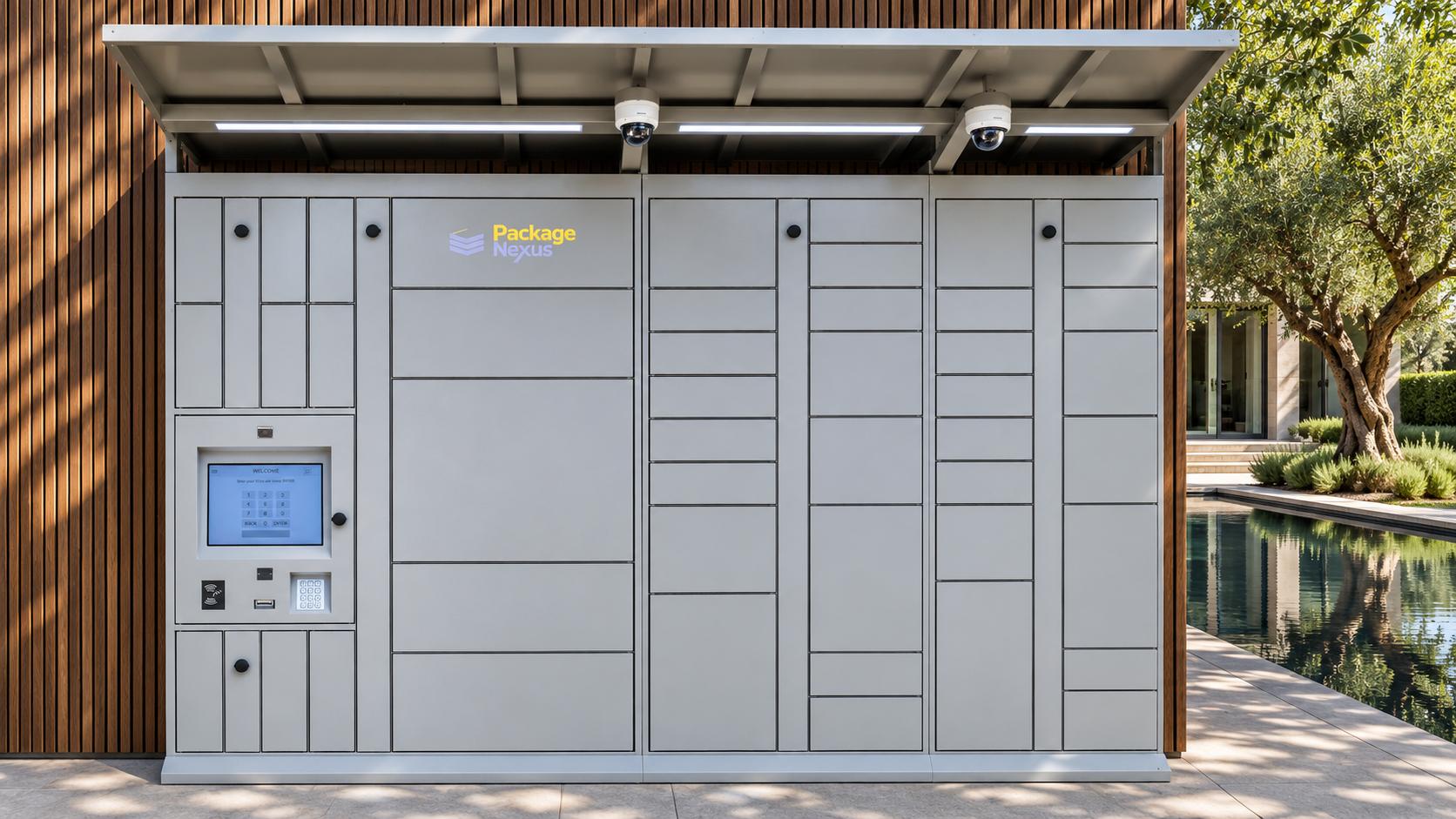
What the locker can verify
Imagine a librarian placing a single magazine flat inside a compartment. The magazine has little height, and its patron may collect it hours after the branch closes. Package Nexus designed its library pickup lockers to recognize the deposit and subsequent removal of supported items, including a book, CD, audio cassette or magazine. The branch can associate that event with a hold and notify the patron when the item is ready.
Presence and identity answer different questions. A sensor can establish that something remains inside. The circulation record or item scan establishes which title belongs to the patron. If a library bundles several holds in one compartment, demonstrate what the system records when the patron takes one item and leaves another.
How a verified handoff works
A carrier selects or scans the recipient, and the system assigns an available compartment. Placement detection lets the software record the deposit and issue pickup details. Later, the recipient scans or enters a credential to open the assigned door. Removal detection gives the software physical evidence for closing the transaction and returning the compartment to service. See how indoor smart parcel lockers work.
| What happened | What the workflow should do |
|---|---|
| Door closed on an empty compartment | Recognize the missing deposit and guide the carrier before issuing a pickup notice. |
| Carrier left before finishing the screen sequence | Use the detected placement and configured recovery steps to reconcile the unfinished delivery. |
| Recipient opened the door and left the item | Recognize continued occupancy and keep the compartment from being reassigned as empty. |
| Door remained open | Identify the open-door condition and prompt or escalate according to site settings. |
Take these four cases to the demonstration. Ask to see the recipient notification, the compartment status and the manager’s event record after each one. Together they show whether an exception actually gets resolved.
What the patent adds to a buying decision
Package Nexus describes itself as the sole provider of its third-generation On-Auto-Pilot platform. Its distinction is the combination of protected sensing hardware and software that acts on the result. For a buyer, the practical question is which missed steps the locker can recover from while the courier or recipient is still there.
How to compare competing lockers
A property evaluating Luxer One, Parcel Pending, Amazon Hub or Package Concierge can run the same deposit and pickup tests on each proposed model. Luxer One’s support guide describes iPads in its systems and a carrier workflow that includes recipient lookup, label scanning and size selection. Parcel Pending documents infrared package detection and contactless pickup on an outdoor model. Ask each vendor to show what happens after detection, particularly when the user leaves mid-transaction.
Estimate the staff time at stake
Package Nexus estimates that 5–15% of manual confirmations can be wrong or missing. Treat this company estimate as a planning assumption. For every 1,000 transactions requiring confirmation, that range would represent 50–150 questionable entries. Only some require intervention. A property can estimate its own cost by counting the cases staff actually investigate and timing them.
For example, 30 inquiries at eight minutes each consume four staff hours a month. During a pilot, count empty-locker complaints, unnecessary site visits and minutes spent tracing deposits. Those observations give the owner a defensible basis for comparing bids.
Designing the right installation
Luxury multifamily and unattended properties
For a resident arriving home late, a clean entry and a working pickup credential matter more than a concierge’s availability. With smart lockers for apartments and condos, couriers can deliver and residents can collect around the clock where building access permits. Touchless pickup can keep residents off the shared screen. Individually secured compartments, credential-linked records and camera coverage help the team investigate disputed handoffs.
Custom finishes and wraps let the locker bank follow the building’s architecture. Moving routine deliveries out of the leasing office clears the arrival area for residents and tours. At a property with limited on-site staffing, automatic recovery can also spare the manager a trip for a courier’s unfinished session.
Outdoor exposure and temperature-sensitive deliveries
Specify outdoor parcel lockers for an exposed site. Package Nexus offers heavy-duty 12-gauge galvanized steel, an outdoor-rated monitor, motion sensors and security cameras. Under the canopy, LED lighting illuminates the approach and controls. An LED inside each compartment helps a resident spot a dark envelope or a slim magazine at night.
Choose ambient compartments for ordinary parcels and temperature-controlled lockers for deliveries with defined hot, refrigerated or frozen storage requirements. A canopy shelters the user and cabinet. A temperature-controlled tower addresses the separate question of how the contents will be stored.
Industrial hardware and modular growth
Package Nexus pairs an industrial-grade computer with a touchscreen, Braille keypad, cameras, barcode readers and speakers. Its industrial kiosk hardware supports a commercial installation where scanner, door controls and user interface must work together throughout the day. Ask about service access and component replacement when evaluating the expected life of the system.
Package Nexus is 100% U.S.-owned and operated. Its fully modular design lets a community start with the compartment sizes it needs today and add towers as occupancy or parcel volume grows. Reserve wall length, clearances and utility access during design so expansion remains practical.
Where verified pickup makes the greatest difference
| Setting | Handoff to design around |
|---|---|
| Public library | A patron retrieves a single CD or magazine after closing. Link the hold, credential and removal event so circulation staff can trace a disputed pickup. |
| Luxury apartment community | A resident arrives after the concierge leaves. Provide a clear, well-lit route from the entrance to an individually secured compartment. |
| Retail pickup | An associate stages a prepaid order. Verifying the deposit before sending the ready message helps avoid a customer arriving at an empty locker. |
| Corporate mailroom or warehouse | The receiving desk assigns a delivery to an employee. A recorded pickup supports shift changes and reduces calls asking who collected the item. |
| Student housing or hotel | Peak arrivals compete for counter space. Mix compartment sizes and provide a clear overflow procedure for bulky deliveries. |
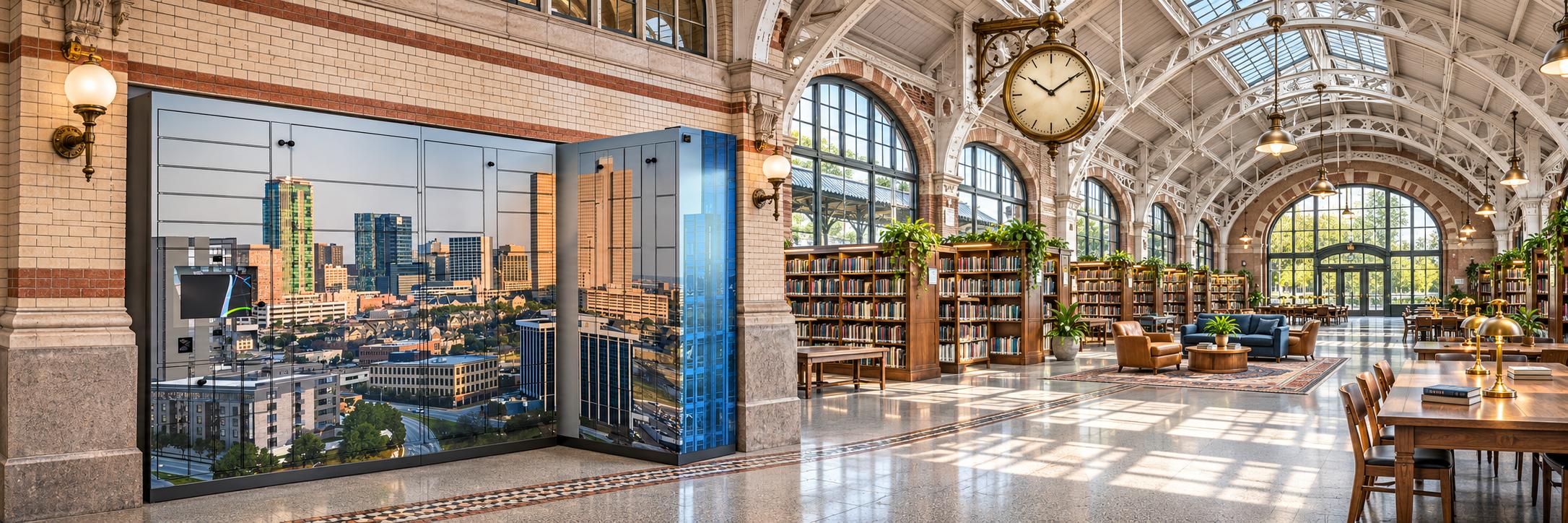
What to bring to a live demonstration
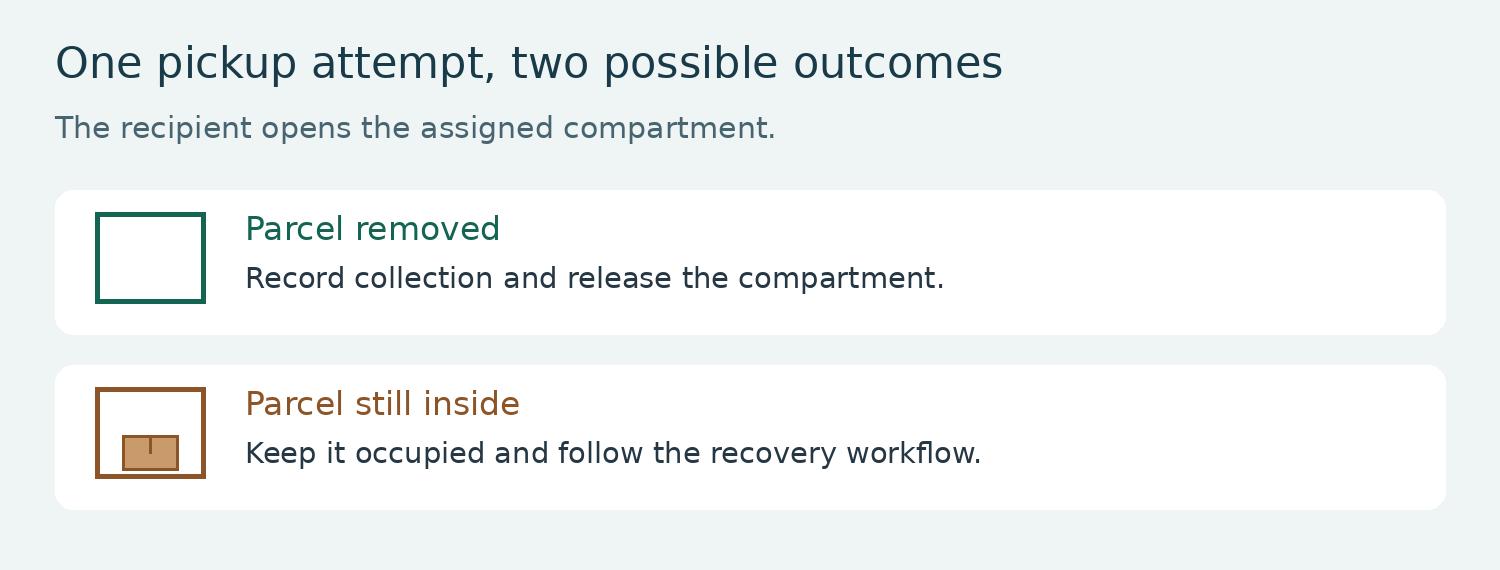
Bring a thin magazine, a CD case, a small padded envelope and a typical delivery box. Try the lightest item in more than one position. Ask a second person to use the pickup credential and deliberately leave the item inside. Then inspect what the user sees, what the system records and whether the door becomes available to the next courier.
For libraries, include a partial pickup. For apartment communities, repeat a transaction after the office closes and test the route from building entrance to locker. For an outdoor installation, view the screen in daylight and read a label inside a lower compartment at night.
To see the workflow with your property’s items and delivery patterns, request a Package Nexus demonstration. Ask for the event record from each test alongside a proposed tower layout.
Frequently asked questions
Can a locker verify a book or magazine pickup without a Yes or No prompt?
Package Nexus uses its sensing and workflow technology to establish placement and removal for supported items. In a library, a patron can authenticate, open the assigned compartment and take the hold. Check thin items, typical cases and bundled holds during the demo so the configuration reflects the branch’s collection.
Does 100% reliance on technology mean every record is correct?
The percentage describes how the supported workflow determines whether the item is present or absent. The person using the locker still needs the correct recipient or hold record. A wrong unit selection, mislabeled parcel or incorrect title can require investigation even when the sensor correctly detects a deposit.
Will property managers still have to troubleshoot deliveries?
The locker can handle routine exceptions that would otherwise send someone to the package room. A manager can review the record when a resident raises a question. Staff may still need to address a damaged item, a courier who leaves a parcel outside, an outdated directory entry or a hardware service issue.
Are all patent-protected lockers equivalent?
Each patent covers the invention described in its claims. Ask the supplier which granted patent relates to the feature in the bid, what the locker senses and how the software uses that information. A demonstration with an empty compartment and an interrupted pickup reveals more about the proposed workflow than a patent label alone.
Can the same system serve outdoor parcels and grocery deliveries?
Yes. Plan the outdoor cabinet, display, canopy and lighting for the site’s exposure, then specify temperature-controlled compartments for products that need them. Size the ambient and temperature-controlled towers separately using delivery peaks and the time items typically remain in storage.
How do we expand without replacing the original lockers?
Package Nexus can add modular towers to increase capacity or change the compartment mix. Before installation, review space, power, connectivity and accessible approach routes for the eventual layout. Track occupancy by compartment size so the next tower addresses the actual bottleneck.

Package Nexus is the global technology leader and provider of The World's Most Advanced Smart Parcel Lockers for efficient and most simplified package management for multifamily communities, retailers, universities, libraries, corporate offices, groceries, and more. Package Nexus unique and patented technology offers a fix for human errors at the time of package deliveries and pickups. Package Nexus solutions help property, store, and office managers to improve their operations, reduce operating costs, and increase customer satisfaction at the same time. Package Nexus offers its entire suite of solutions globally.
USEFUL LINKS

© 2017-2026 Package Nexus